The breeze over Victoria Harbour is sweeping away the traces of traditional fossil fuels, carrying the fresh scent of green methanol.
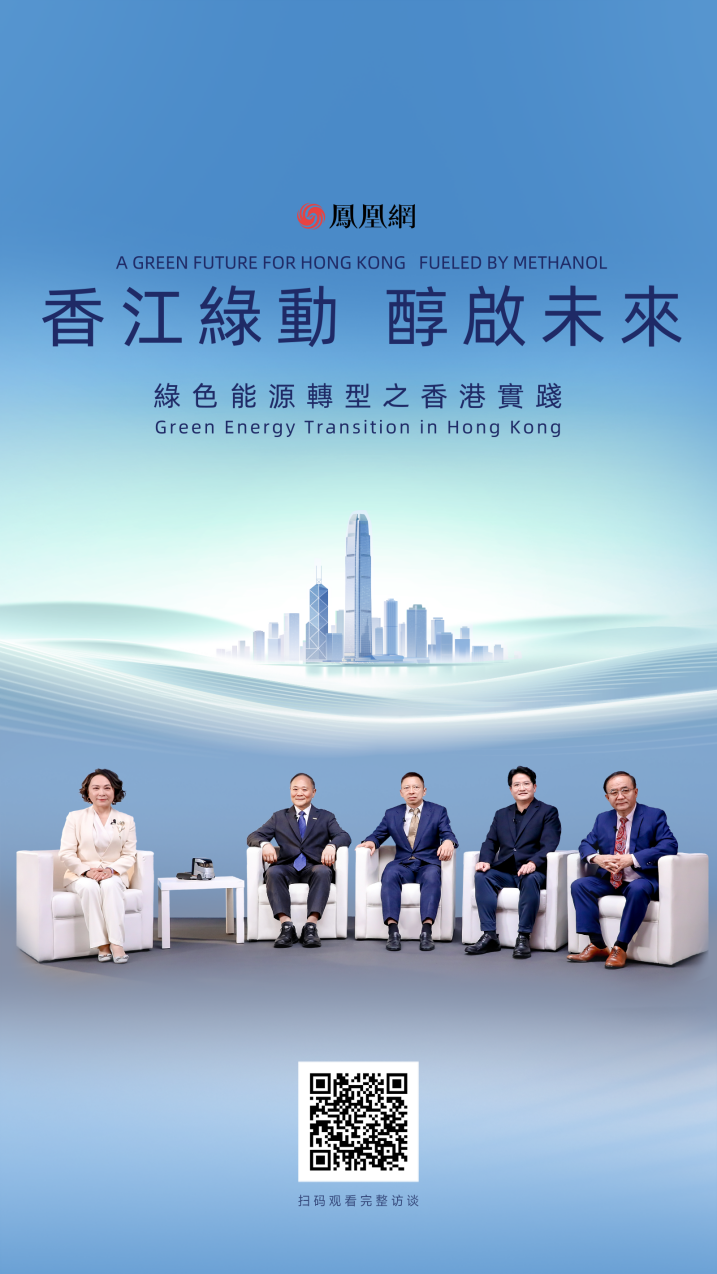
Recently, during the special interview Green Momentum in Hong Kong · A New Era Powered by Methanol hosted by Zeng Jingyi, a member of the National Committee of the Chinese People’s Political Consultative Conference and anchor of Phoenix TV’s Jinshi Finance, four guests from industry, academia and the legislative sector held in-depth dialogues on the future development of green energy, covering technological advancement, energy security, urban governance and financial regulations.
The “Methanol Solution” Amid Global Energy Shifts
The global energy transition faces a trilemma: securing energy supply, achieving carbon neutrality, and maintaining economic viability. Geopolitical conflicts have prompted countries to re-evaluate energy independence, yet their paths vary widely. Europe has bet on wind, solar and hydrogen, Japan is focusing on hydrogen and synthetic fuels, while the United States is pursuing a coordinated model of natural gas and renewable energy. Based on China’s national conditions of “abundant coal, scarce oil and limited gas”, the country has forged a diverse system of “wind-solar power + green hydrogen + green methanol”.
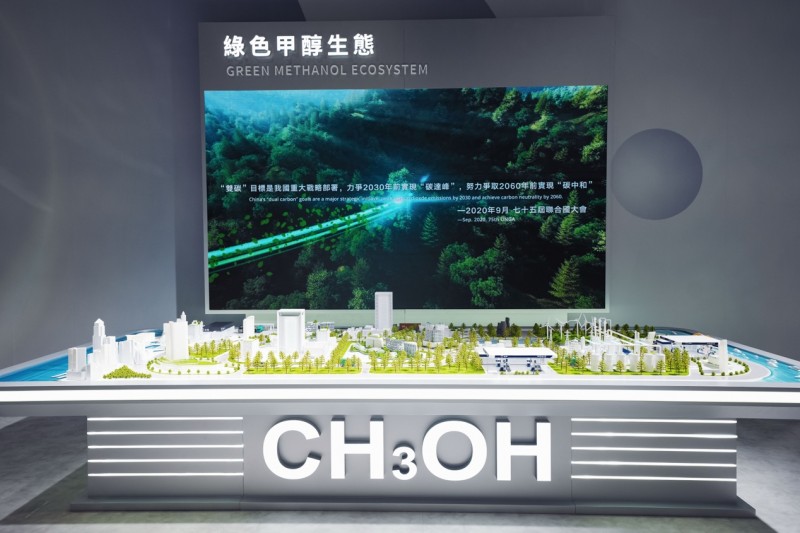
During the interview, Liu Ke, foreign academician of the Australian Academy of Technology and Engineering and Dean of the School of Innovation and Entrepreneurship at Southern University of Science and Technology, pointed out that “batteries cannot solve all problems”. They are more suitable for flat and warm regions, while liquid energy remains a rigid demand in cold mountainous areas and heavy-duty shipping scenarios. “Vessels around the world are still burning heavy oil, but batteries are too heavy and have insufficient range.” Green methanol has become one of the few scalable paths that can align with the carbon neutrality agenda in the long run, thanks to its advantages of being liquid at room temperature and pressure, compatible with existing oil and gas infrastructure after low-cost renovation, and producing only one-tenth of the emissions of China 6 standard gasoline vehicles. “80% of methanol’s energy comes from wind and solar power, with only 20% derived from carbon. It is cost-controllable and far cleaner than gasoline and diesel.”
This echoes the observation of Zhang Chaoyang, Founder, Chairman and CEO of Sohu, and Doctor of Physics: Methanol requires less oxygen for combustion and has a lower risk of incomplete combustion. “Its molecular structure contains inherent oxygen atoms, making it cleaner than gasoline. Its energy density and storage and transportation convenience are particularly suitable for high-density cities.”
This is precisely the wisdom of the methanol solution. Against the backdrop of global energy diversification, no single energy source can dominate all scenarios, but methanol offers a pragmatic option rooted in Eastern wisdom. Instead of negating existing technical systems, it pursues incremental innovation on the current foundation. This “progressive innovation” often boasts stronger practical viability than radical “disruptive revolution”, serving as a common ground that addresses the three major constraints of energy security, carbon neutrality and economic efficiency.
Hong Kong’s Transformation: From a Transit Hub to a Pricing Center
When the topic turned to Hong Kong, Chan Bok Chi, a member of the Legislative Council of the Hong Kong Special Administrative Region, stated bluntly that Hong Kong is standing at a crossroads of transformation, with the Climate Action Blueprint 2050 having clearly defined its direction. As Zeng Jingyi mentioned in the program, Hong Kong recently completed the world’s first methanol dual-fuel ship bunkering operation, and its new energy vehicle penetration rate has ranked first in Asia. The key now lies in the Legislative Council’s efforts to remove institutional barriers.
Efforts should be accelerated to improve bunkering specifications, promote tax exemptions and mutual recognition of standards, and lower the threshold for renovating traditional facilities. “Bunkering codes of practice, safety standards and transportation regulations all need to be aligned at a faster pace”, so that Hong Kong can evolve from a mere transit hub for green fuels into a leading green methanol trade and pricing center in Asia.
Chan Bok Chi also specifically noted that the fuel costs for fishermen at sea have been continuously rising, and short-term diesel subsidies are not a long-term solution. A diversified energy mix is the fundamental way out.
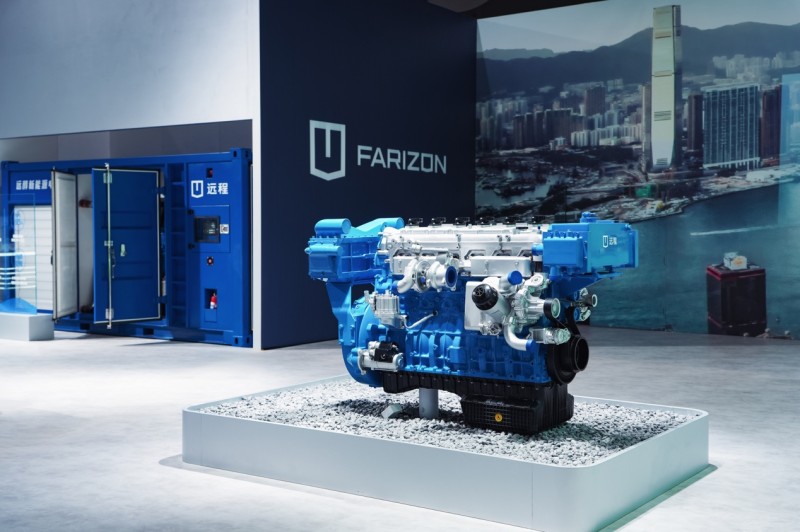
This transformation has a solid practical foundation. Chan Bok Chi pointed out that liquid new energy is naturally compatible with traditional oil and gas infrastructure, and its bunkering, storage and transportation, and trade can leverage existing systems at low costs. This means Hong Kong does not need to “reinstall its entire system”, but only needs a “software upgrade”. As a free port, Hong Kong can fully connect the green methanol industrial chain in the Chinese mainland with shipping and international trade in Southeast Asia, becoming a bridgehead for rule export.
Hong Kong’s real opportunity does not lie in how much green methanol it produces, but in leveraging its common law system and status as a financial center to translate the mainland’s production capacity advantages into pricing power and standard-setting power in the international market. This is the most irreplaceable value under the “One Country, Two Systems” framework.
Geely’s “Methanol Answer”
In this energy revolution, the “methanol answer” brought by Li Shufu, Chairman of Geely Holding Group, represents a “Geely-style exploration” that connects national strategies with Hong Kong’s practices.
Looking back on more than 20 years of persistence, Li Shufu spoke firmly: “Methanol is not an alternative option, but one of the global energy paths that will coexist with electricity and hydrogen in the long run.” This persistence is not a reckless gamble, but a strategic judgment based on China’s energy structure. Today, Geely has put about 60,000 to 70,000 methanol vehicles into operation across the Chinese mainland, covering diverse climate zones such as Guiyang and Harbin, which has verified the maturity of the technology. The central government has even provided special subsidies for inland methanol-powered vessels, demonstrating clear top-level policy support.
What Geely brings to Hong Kong is a complete “integrated solution for green, smart transportation and new energy ecosystems”.
Li Shufu revealed that if the standards and regulatory frameworks that have been proven effective in the mainland are adopted, the implementation of methanol vehicles in Hong Kong “can be achieved very quickly”. The renovation cost of existing gas stations is low, and the relevant technical equipment is fully mature. Cao Cao Mobility’s Robotaxi has also submitted an application in Hong Kong, hoping to provide services for local residents. The combined strategy of “green methanol + intelligent driving” will offer an optimal solution for high-density urban energy transformation. Methanol hybrid vehicles can reduce vehicle weight and cut energy consumption during frequent acceleration and deceleration, making them particularly suitable for Hong Kong’s mountainous road conditions.
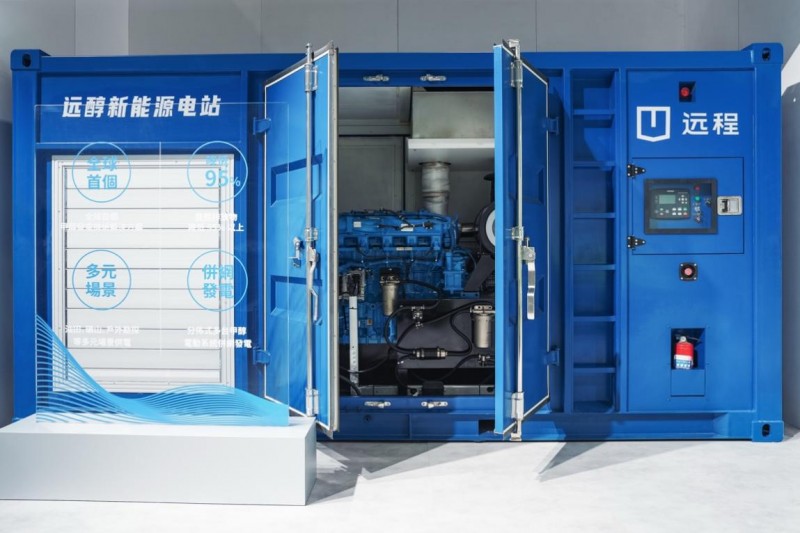
The deeper significance lies in the validation of standard export. Leveraging Hong Kong’s international certification and financial advantages is expected to help Geely break through barriers in standard mutual recognition, bunkering infrastructure and tariff links. As Academician Liu Ke said, “Nearly 20,000 methanol vehicles in Guiyang have been operating for more than 10 years with zero safety accidents”, which refutes the misconception that “methanol is toxic and unsafe”. It is necessary to avoid man-made obstacles similar to the “Red Flag Act”, so that scientific progress can benefit the public. If Hong Kong introduces this mature system, it will not only reduce pollution from local ports and container trucks (over 60% of emissions in port cities come from diesel-powered ships and container trucks), but also set a model for port cities around the world. This is not just Geely’s solution, but a replicable “business card” for high-density urban energy transformation.
Evidently, the significance of Hong Kong’s pilot program lies in verifying whether this energy ecosystem fully defined by Chinese enterprises can gain institutional recognition in the high-end international market.
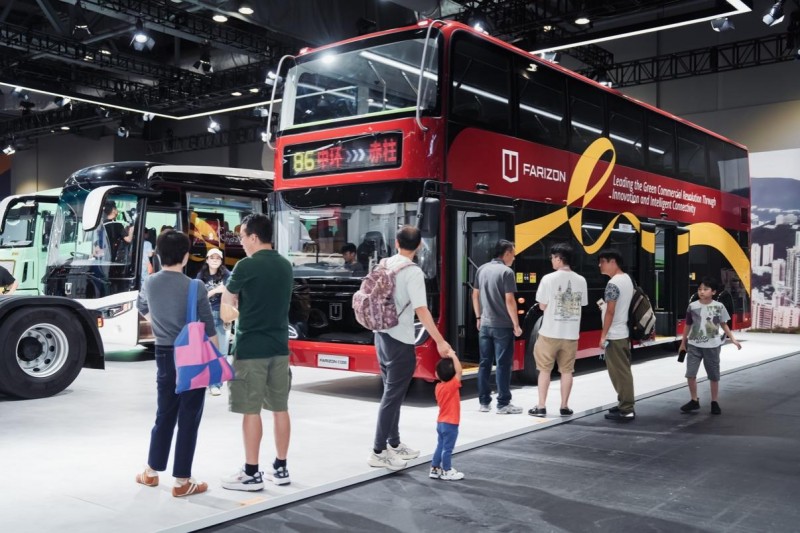
“The world needs diverse energy sources, China has mature technologies, and Hong Kong has unique systems. When the three are combined, they create new opportunities for Hong Kong,” Zeng Jingyi concluded the dialogue, outlining a future vision: when vessels on Victoria Harbour and buses on the roads are all powered by “liquid sunshine”, and cross-border travel in the Guangdong-Hong Kong-Macao Greater Bay Area becomes more convenient and intelligent thanks to green methanol, the global methanol price benchmark will be established right here by the Victoria Harbour.
This is not just a matter for one enterprise, but a major undertaking related to China’s energy strategy that benefits the country and its people. If Hong Kong sets a good example, it will serve as a demonstration for port cities around the world.
The greatest value of this dialogue lies in breaking the traditional division that separates technology from finance. It proves that in the deep waters of energy transition, the party that can effectively integrate technology, rules and capital will seize the initiative in the next era.
From technological breakthroughs to standard formulation, from industrial implementation to financial pricing, Hong Kong is advancing into the deep waters of energy transformation with a brand-new posture. Here, China can not only provide technologies, but also contribute rules and wisdom. Hong Kong’s transformation is a Chinese exploration, and also a global opportunity.